What can be 3D printed?
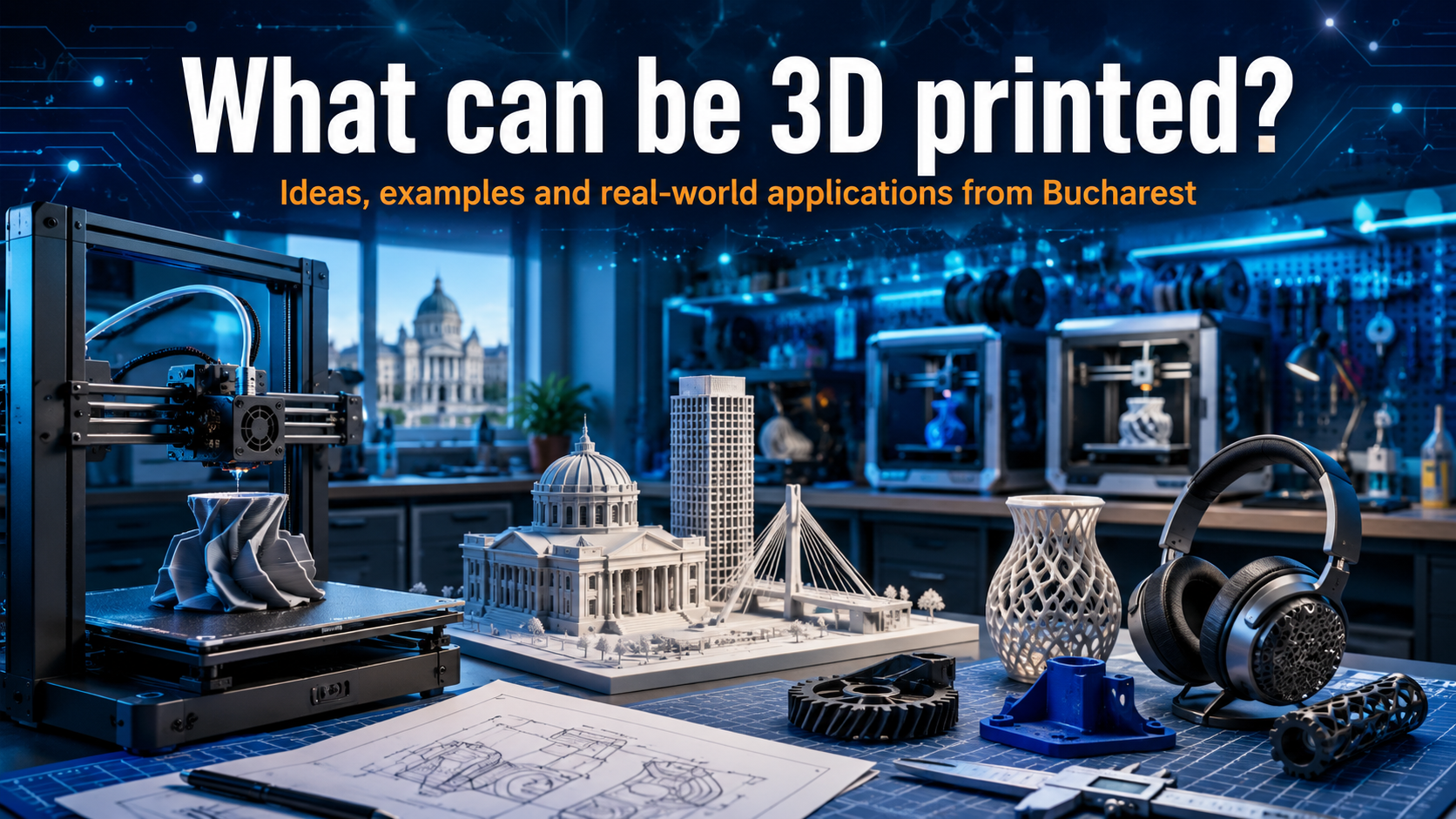
3D printing has become one of the most versatile modern manufacturing technologies. From decorative objects and personalized accessories to industrial components and functional prototypes, the possibilities offered by this technology are becoming increasingly extensive.
Today, 3D printing is used by both companies and individuals who need fast, personalized, and cost-effective products. At iPrintat.ro, requests range from technical parts and mockups to creative products and custom solutions for various industries.
How does 3D printing work?
The process involves building an object layer by layer, starting from a 3D digital model. Depending on the technology used and the material chosen, the result can have an aesthetic, functional, or industrial role.
The most popular materials include:
- PLA – ideal for prototypes and decorative objects
- PETG – strong and suitable for technical uses
- ABS – used in industrial applications
- Resin – for very fine details and premium finishes
- Nylon and composites – for high mechanical strength
Objects that can be 3D printed
Prototypes for new products
One of the most common uses of 3D printing is to create rapid prototypes. Designers and engineers can test dimensions, functionality, and shapes before final production.
The advantages are clear:
- reducing development costs
- rapid validation of concepts
- easy implementation of changes
- reduced time to launch
For startups and development teams, 3D printing offers flexibility without major investments in molds or production lines.
Technical parts and components
Many companies use 3D printing to create:
- custom casings
- supports and adapters
- fastening elements
- components for automation
- hard-to-find spare parts
In some cases, a part can be produced in a few hours, without waiting for weeks for a standard component to be delivered.
Decorative objects and personalized products
3D printing is extremely popular in the creative area as well. It is possible to create:
- interior decorations
- figurines
- trophies and awards
- volumetric letters
- custom frames and stands
- office accessories
The high level of customization turns each object into a unique product.
Products for architecture and design
Architects and designers frequently use 3D printed models for presentations and concept validation.
The benefits include:
- realistic representation of projects
- clearer presentations for clients
- reduced execution time
- rapid iteration
Models can include complex details that would be difficult to create manually.
Useful objects for the home
More and more people are choosing to print objects for daily use:
- organizers
- cable holders
- kitchen accessories
- furniture elements
- hooks and holding systems
- quick repair parts
This approach offers the freedom to create exactly the object needed, without compromises.
3D printing in medicine and education
The technology is also used in advanced fields such as:
- anatomical models for study
- personalized prostheses
- medical simulators
- STEM educational projects
- components for robotics
In education, 3D printing helps students and pupils to transform ideas into real objects, stimulating creativity and practical thinking.
Products for hobby and gaming
The gaming, cosplay, and hobby communities use 3D printing extensively for:
- miniatures
- cosplay accessories
- board game components
- console and controller supports
- custom PC setup elements
The level of detail and the freedom of design make 3D printing an ideal solution for creative projects.
Limitations of 3D printing
Although the technology is extremely flexible, there are also some limitations:
- the size of objects depends on the size of the printer
- some finishes require post-processing
- certain materials have higher costs
- mass production remains more efficient through traditional methods
However, for small series, prototypes, and personalization, 3D printing remains one of the most efficient solutions available.
Why are more and more companies choosing 3D printing?
The rapid adoption of this technology is due to the clear advantages it offers:
- rapid production
- high flexibility
- low prototyping costs
- complete customization
- no need for molds
- accelerated product development
In addition, 3D printing allows for testing and optimization of products at a pace that is impossible to achieve with traditional methods.
3D printing is no longer just an experimental technology, but a practical solution used in numerous industries. From simple objects for personal use to industrial components and complex prototypes, almost any idea can be transformed into a physical object. As materials and equipment evolve, the possibilities offered by 3D printing will continue to increase, and personalization will become a standard in more and more industries.