AI 3D Model Generation: How Artificial Intelligence Is Changing 3D Design
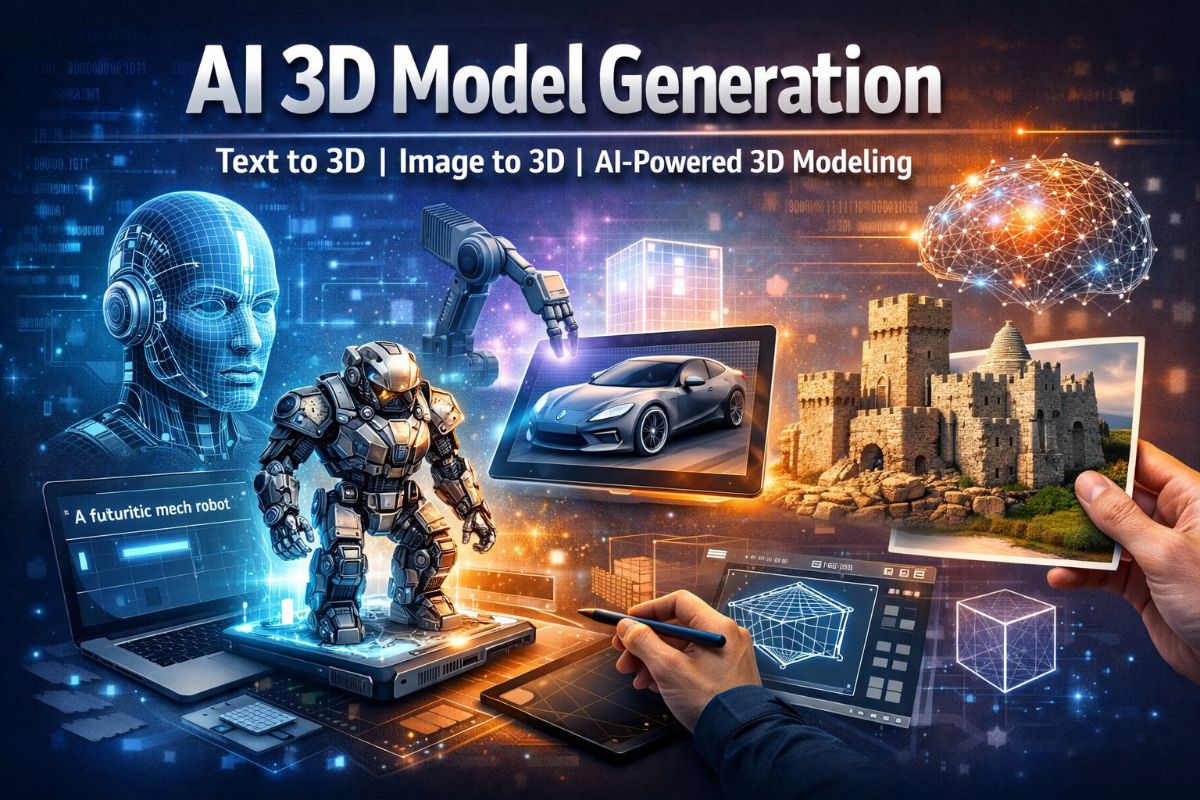
AI 3D Model Generation: How Artificial Intelligence Is Changing 3D Design
Introduction
Artificial intelligence is rapidly transforming the way 3D models are created. What once required hours of manual work in complex CAD or sculpting software can now be accelerated using AI-powered 3D generation tools.
From concept design and rapid prototyping to game assets and product visualization, AI allows designers and engineers to generate 3D geometry directly from text prompts, images, or existing data.
At iPrintat, we combine AI-assisted modeling with professional CAD design and 3D printing to rapidly transform ideas into functional physical objects.
What Is AI 3D Model Generation?
AI 3D generation refers to the process of creating 3D models using machine learning algorithms trained on large datasets of geometry, images, and shapes.
Instead of manually modeling every surface, AI tools can automatically generate geometry based on inputs such as:
text descriptions
images
sketches
existing 3D data
depth information
This significantly speeds up early-stage design and concept exploration.
Modern Methods for Generating 3D Models with AI
Text-to-3D Generation
Text-to-3D systems allow users to describe an object using natural language. The AI then generates a 3D model that matches the prompt.
Example prompt:
“a futuristic mechanical drone with exposed gears and industrial design”
These systems typically rely on diffusion models and neural fields trained on millions of shapes.
Popular keywords in this field include:
AI text to 3D
generative 3D models
AI 3D asset generation
Text-to-3D is particularly useful for concept art, prototyping, and creative exploration.
Image-to-3D Reconstruction
Image-to-3D systems reconstruct a 3D model from one or multiple images.
The AI analyzes shape, depth, and perspective to generate a 3D mesh.
This method is widely used for:
product digitization
cultural heritage preservation
game asset creation
reverse engineering
Image-based reconstruction can also be combined with 3D scanning workflows for improved accuracy.
AI-Assisted 3D Modeling
Instead of generating a full model automatically, AI can assist designers during the modeling process.
Examples include:
geometry prediction
automatic mesh repair
topology optimization
procedural geometry generation
intelligent retopology
This approach blends human creativity with machine acceleration.
Neural 3D Representations
Modern AI systems often rely on neural representations rather than traditional polygon meshes.
These include techniques such as:
neural radiance fields (NeRF)
implicit surfaces
diffusion-based geometry generation
These methods allow AI systems to understand and reconstruct complex shapes with remarkable realism.
Benefits of AI-Generated 3D Models
Faster Concept Development
Designers can generate dozens of variations in minutes instead of hours.
Rapid Prototyping
AI models can quickly be converted into printable geometry for physical testing.
Creative Exploration
AI tools can generate shapes that would be difficult to imagine or model manually.
Lower Barrier to Entry
Non-experts can create 3D concepts without advanced modeling skills.
Limitations of AI 3D Generation
Despite its potential, AI-generated geometry still has limitations.
Mesh Quality Issues
Generated models may contain:
non-manifold geometry
holes
messy topology
Lack of Engineering Precision
AI models are typically conceptual, not dimensionally accurate.
Post-Processing Required
Most AI-generated meshes require cleanup and optimization before they can be used in manufacturing or 3D printing.
This is where professional modeling becomes essential.
AI 3D Models and 3D Printing
AI-generated meshes can be converted into STL files and prepared for additive manufacturing.
However, to ensure successful printing, models usually require:
mesh repair
wall thickness optimization
support planning
structural adjustments
At iPrintat, we often refine AI-generated models and prepare them for functional 3D printing and prototyping.
AI Tools Used in Modern 3D Generation
The ecosystem of AI-powered 3D tools is growing rapidly.
Some well-known tools include:
Stable Diffusion-based 3D workflows
Blender with AI plugins
Meshy
Luma AI
These tools enable creators to generate and refine 3D assets faster than ever before.
How iPrintat Uses AI in 3D Workflows
At iPrintat, we combine AI technologies with traditional engineering workflows to deliver practical results.
Our pipeline can include:
AI concept generation
professional CAD refinement
reverse engineering
geometry optimization
high-quality 3D printing
This hybrid workflow allows us to move from idea → digital model → physical prototype quickly and efficiently.
Conclusion
AI is transforming the world of 3D design by enabling faster concept generation, automated modeling, and powerful new creative workflows.
While AI cannot fully replace traditional CAD or engineering design, it has become a valuable tool for accelerating innovation.
When combined with professional modeling and 3D printing expertise, AI-generated models can quickly evolve into real, functional products.
If you want to turn an AI-generated concept into a printable or manufacturable 3D model, iPrintat can help you bring that idea to life.
Tags
AI 3D model generation
text to 3D AI
image to 3D
generative AI 3D models
AI 3D modeling tools
3D printing with AI
AI design workflow